
What to Look for in a Dog Boarding Facility in Connecticut
When you need dog boarding in Connecticut, you are not simply looking for a place that feeds your dog and hoses down a kennel run. You are looking for a place where your dog will be safe, clean, well managed, and genuinely cared for while you are away.
That distinction matters. Some facilities are orderly, observant, and professionally run. Others are noisy, overstimulating, reactive, and thin on standards. Your dog feels that difference immediately, and so do you.
Quick Take: The best dog boarding facility in Connecticut should be licensed, clean, structured, and professionally managed. It should have clear health protocols, strong supervision, thoughtful exercise and enrichment, reliable documentation, and staff who understand canine behavior rather than simply rotating dogs through a building. In short, you want order, safety, and care you can trust. |
Start with licensing, cleanliness, and safety
Before you fall for pretty photos or polished marketing, begin with the non-negotiables. A professional boarding facility should be licensed, clean, secure, and consistent in how it is maintained. In Connecticut, commercial kennels are regulated under Chapter 435 of the Connecticut General Statutes, which sets the baseline expectations for licensed dog facilities in the state.
Look beyond the lobby. A polished front desk means very little if the back runs dirty, cluttered, or disorganized.
Pay attention to fencing, flooring, airflow, drainage, and odor. A good facility should feel fresh and controlled, not masked with perfume or chemical smell.
Ask what happens during inspections, health concerns, emergencies, or contagious illness risk. Serious operators will have clear answers. AKC specifically recommends asking about licensing, sanitation, supervision, and emergency procedures before choosing a boarding facility.

Connecticut dog owners should expect a facility that treats sanitation and safety as daily disciplines, not occasional chores. That is one of the clearest signs that a kennel is operating at a professional level.
Look for order, not chaos
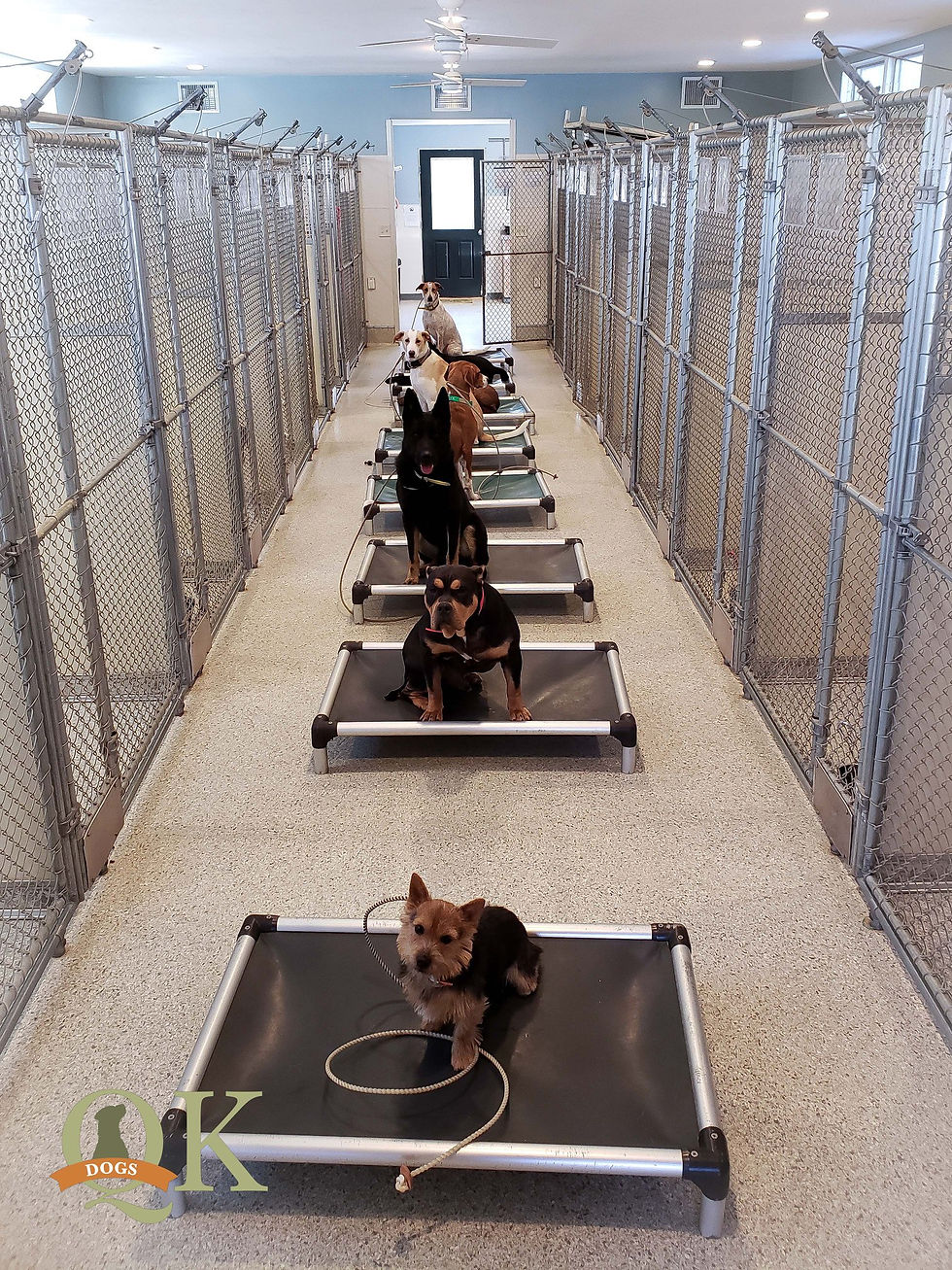
A boarding facility should not feel like a loud holding pen where dogs are simply contained until pickup. It should feel intentional. Dogs need rhythm, structure, clear handling, and appropriate outlets. They also need staff who can read the difference between healthy excitement and stress, between social play and overstimulation, and between confidence and shutdown.
At Quinebaug Kennels, that belief shaped everything I built. I never wanted a dog warehouse. I wanted a place where dogs could be cared for with leadership, movement, rest, enrichment, and order.
Ask what your dog's actual day looks like
One of the smartest questions any owner can ask is this: What does my dog's actual day look like? A quality facility should be able to walk you through the rhythm of the day with confidence and detail. AKC emphasizes the same principle for any group dog environment: owners should understand how dogs are grouped, supervised, exercised, and rested.
• How are dogs exercised?
• How are dogs grouped, rotated, or separated?
• How is rest built into the day?
• How are meals and medications handled?
• What happens if a dog seems stressed, sore, sick, or behaviorally off?
For me, excellent boarding supports the whole dog. That means movement, emotional balance, routine, rest, meaningful human interaction, and a setting built for wellbeing rather than mere containment. That is why QK was designed around better lives for dogs while their owners travel.
Health protocols matter more than most owners realize
Any place where dogs gather carries shared health risk. That is why immunization requirements, symptom monitoring, isolation protocols, cleaning standards, and communication with owners matter so much. AAHA notes that group settings are where respiratory illness most often spreads in dogs, and that vaccination, ventilation, and prompt symptom response are essential parts of responsible group care.
A clean facility is not merely one that photographs well. It is one that has systems, written standards, and staff accountability. The more dogs a facility handles, the more important those systems become.
Documentation reveals the true standard of care
One of the clearest signs of a professional dog boarding facility is documentation. If a team can tell you exactly what your dog ate, how your dog presented, whether medications were given, whether stool quality changed, or whether behavior shifted, that reflects a far higher level of care than a vague 'he did great.'
At QK, we use specialized Gingr software and detailed SOPs to track the details that matter: food, weight trends, health notes, daily presentation, and anything else we need to know to care for a dog responsibly. Sometimes we know more about a dog's day than the owner does. That should not surprise anyone. It is our job.
Not every dog should be boarded everywhere
This is an important sign of an honest kennel: it does not accept every dog simply to fill space. Dogs that are dangerous, deeply unstable, or unable to cope in a kennel setting may need a different plan or a different level of management. Fear Free Pets reinforces the same principle, noting that humane, low-stress handling depends on matching the dog to the environment that genuinely fits their temperament and needs.
That is not rejection. That is responsible judgment. At QK, we do not tolerate chaos. Our responsibility is to create order, protect the group, protect the staff, and give every suitable dog the safest and most enriching environment possible.
In Connecticut, environment matters
Connecticut dog owners should also consider the setting itself. Dogs often do better in environments with more space, less congestion, better airflow, and more thoughtful opportunities for decompression.

Quinebaug Kennels is tucked into Connecticut's Quiet Corner, within reach of Boston and New York, yet grounded in a calmer rural landscape. That setting was intentional. My vision was never cages and small kennel runs. I wanted room to move, room to breathe, room to exercise, and a property built to support canine fitness, enrichment, comfort, and security.
What makes QK stand out
What makes Quinebaug Kennels different is not one luxury feature or one polished phrase. It is the total standard. Twenty-five years of constant and never-ending improvement.

Detailed cleaning practices. Painstaking grounds maintenance. Investment in equipment, fitness, enrichment, and wellness. Strong leadership. Written systems. Accurate records. Thoughtful handling. And a clear expectation that dogs should thrive here, not merely get through their stay.
We often tell owners, 'Thank you for trusting us with someone you love. We will take it from here, so you can travel with real peace of mind.' That is the goal. When a dog comes through our doors, the job is not to manage chaos. The job is to create safety, order, comfort, enrichment, and care that is worthy of the trust placed in us.
Final Thought
If you are comparing Connecticut dog kennels, look beyond convenience and price. Look for cleanliness, licensing, health standards, structure, documentation, enrichment, and leadership. Your dog should not merely be watched. Your dog should be known. And when you hand over the leash, you should feel relieved, not uneasy, because you know your dog is exactly where they should be.
See whether your dog is a good fit for QK's structured boarding environment. Explore QK Dogs Boarding and contact our team. |
FAQ
What should I ask before boarding my dog in Connecticut?
Ask whether the facility is licensed, what vaccines are required, how dogs are supervised, what the daily schedule looks like, how illness is handled, and whether staff keep written records on feeding, medications, and behavior.
How do I know if a dog boarding facility is clean?
Look past the reception area. A clean facility should smell fresh, appear organized, have secure fencing, good airflow, and no signs of dirty buildup, masking odor, or sloppy maintenance.
Are vaccines important for dog boarding?
Yes. Group dog environments increase exposure risk. A professional boarding facility should have clear immunization requirements and a clear plan for monitoring and separating dogs who show signs of illness.
Is a rural boarding facility better than an urban one?
Not automatically, but space, air flow, calmer surroundings, and room to move can be meaningful advantages when the property is well managed and used intentionally.
Should every dog be accepted for boarding?
No. A responsible facility knows that some dogs are not safe or suitable for every kennel environment. Honest screening protects your dog, the other dogs, and the staff.
Visit QK Dogs today to learn more about our comprehensive dog care services, including training, boarding, grooming, nail trimming, and more!

About the Author: Jennifer Broome is the founder of QK Dogs, author and creator of the Mastering Canine Communication video series. With over 20 years of experience, she’s helped thousands of dogs and their owners build better relationships through calm leadership, clarity, and structure.


Comments